I spent my first weekend in Rishikesh four years ago, shivering in a thin cotton hoodie at 6:00 AM while a raft guide screamed at our group to forward-paddle through a massive wave on the Ganges. My knuckles were white, my shoes were completely soaked, and I was hooked forever.
Most people come to Rishikesh for peace, ashrams, and yoga. But if you head a few kilometers past the main suspension bridges, you find a totally different scene—one fueled by heavy river currents, steep valley drops, and cold mountain nights.
At Tourio, we don’t do canned tours. We set up real, high-energy itineraries so you can hit the best spots without spending half your day stuck in logistics.
White-Water Rafting on the Ganges
The Ganga isn’t a swimming pool. It’s a massive, living body of water with heavy volume and temperamental rapids.
Here’s how the main stretches break down:
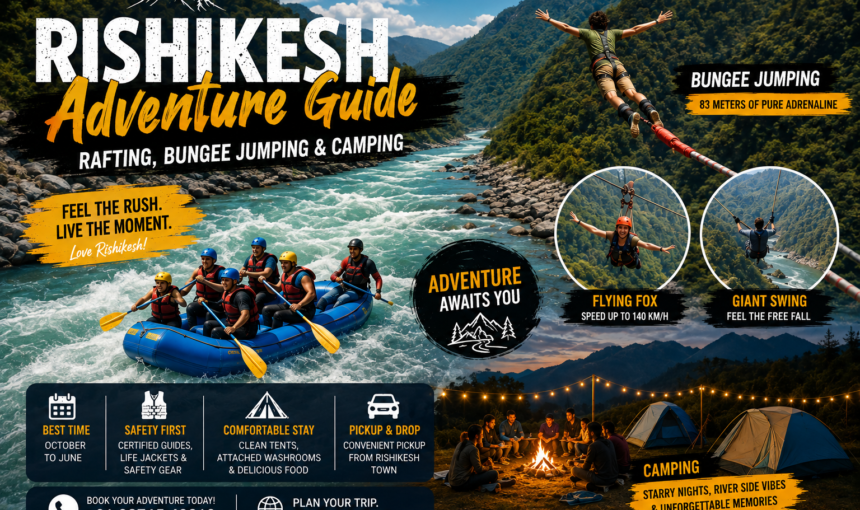
- Shivpuri to Nim Beach (16 km): If you only do one run, make it this one. It takes about two and a half hours and puts you right through Grade III heavy hitters like “Roller Coaster” and “Golf Course.” You will get dumped with cold water, and you will have to paddle hard.
- Brahmpuri to Nim Beach (9 km): A chill, low-stress stretch. Great if you’re traveling with younger kids or family members who want to see the river without getting tossed around.
- Marine Drive to Shivpuri (or all the way down—24 km to 35 km): Reserved for people who want continuous, hard-hitting rapids. The water here moves fast, and the drops are much bigger.
Safety note from our team at tourio.in: Don’t book with unregistered road-side vendors. Every single guide we work with is fully certified, carries proper rescue equipment, and forces everyone—no exceptions—into life vests and helmets before touching the water.
Dropping 83 Meters: Bungee Jumping in Mohan Chatti
Floating down a river is fun, but stepping off an 83-meter plank into thin air is a completely different mental challenge.
The main jump site sits out in Mohan Chatti, roughly 15 km outside the main town. You walk onto a narrow metal platform cantilevered out over a rocky gorge. The worst part isn’t the jump itself—it’s the five seconds where you stand on the edge, looking down at the river rocks below, listening to the jump master count down “3, 2, 1…”
Once you step off, it’s pure, terrifying freefall until the cord catches and snaps you back up.
If you’re already out there, you can also run:
- The Flying Fox: A super-fast zip line where you fly face-first across the valley at up to 140 km/h.
- The Giant Swing: A high-altitude swing with a terrifying initial drop before you arc across the canyon.
We usually bundle all three into a single combo ticket at Tourio so you save time and skip the long lines at the gate.
Camping Out in the Valley
When the sun drops behind the Himalayas, Rishikesh cools off fast. Instead of staying in a concrete hotel in town, head out toward Shivpuri or the surrounding forest valleys to camp.
We skip the noisy, crowded sites. When you book through tourio.in, we put you in clean, spacious tents (with real beds and attached washrooms) right near the running water. At night, everyone gathers around the central fire for dinner, music, and quiet stargazing. Falling asleep to the roar of the river and waking up to fresh mountain air is easily the best part of the whole experience.
Quick Essentials Before You Go
- When to visit: October to June is prime time. Rafting shuts down completely during the monsoon months (July through September) because water levels get dangerously high.
- What to pack: Quick-drying nylon clothes, strap-on sandals (flip-flops float away instantly), sunscreen, and a light jacket for campsite evenings.
- Booking: Bungee slots and quality camps sell out weeks in advance on weekends.
Reach out to tourio.in today, tell us your dates, and let us build your trip!
FAQs:
1. What month is best to visit Rishikesh for rafting and camping?
Plan your trip between October and June. October and November give you clear skies and cool mountain air. March to May is warm enough that jumping into cold river water actually feels amazing. Don’t go between July and September—rafting completely shuts down during the monsoon because heavy rains make the river too wild and unpredictable.
2. Is it safe to raft if I can’t swim at all?
Yes, non-swimmers raft on the Ganges every single day. Everyone gets geared up with a high-buoyancy life jacket and helmet that pop you straight back up if you fall in. Your guide also walks everyone through a safety drill on the beach before the raft ever hits the water.
3. What are the weight and age limits for bungee jumping?
You have to be at least 12 years old and weigh between 40 kg and 110 kg. You’ll fill out a basic health declaration at the site—if you have heart trouble, high blood pressure, epilepsy, or recent back or neck injuries, you won’t be allowed to jump.
4. Which rafting stretch is best for a first-timer?
Go with the 16 km Shivpuri to Nim Beach stretch. It takes roughly two and a half hours, hits famous rapids like “Roller Coaster” and “Golf Course,” but stays completely safe for beginners. If you have young kids with you, stick to the easier 9 km Brahmpuri route instead.
5. What should I wear on the river and at the campsite?
Wear quick-drying synthetic shorts and T-shirts on the river. Steer clear of heavy jeans or cotton tees that soak up water and stay cold. Strap-on sandals or water shoes are a must because flip-flops get ripped right off by the current. For the campsite, bring a warm hoodie for chilly evenings by the river.
6. How do I get to the jump site and camps from town?
Most campsites are out near Shivpuri (about 15 km away) and the bungee platform is in Mohan Chatti (around 25 km out). When you book your package with tourio.in, direct vehicle pickup can be set up from central spots in town so you don’t have to haggle with local cab drivers.